Birth of a Nation: Why the American Revolution Was a Counter-Revolution

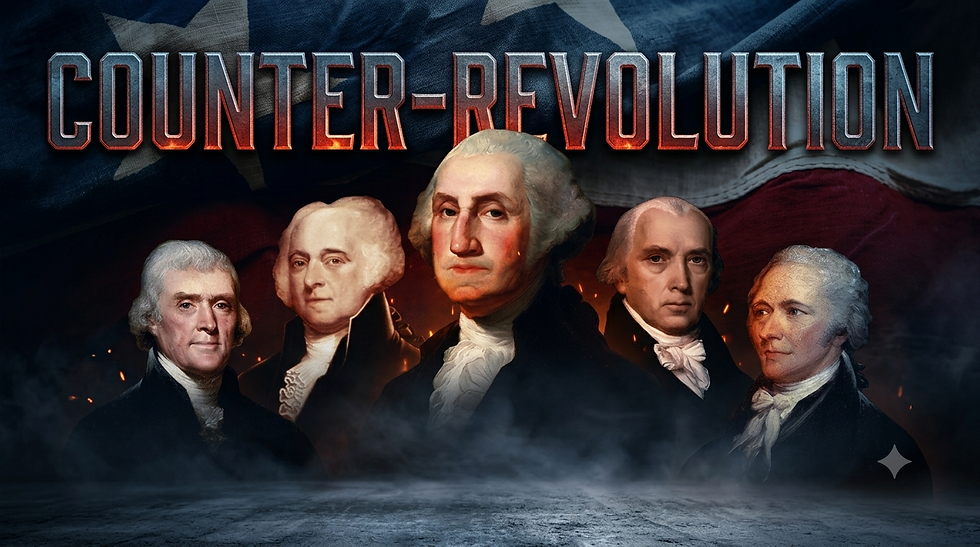
The traditional narrative of 1776 is woven into the very fabric of American identity: a heroic, progressive leap forward for humanity where freedom-loving patriots broke the chains of a tyrannical British monarchy to establish a republic rooted in liberty and democracy.
But according to Dr. Gerald Horne, a prolific historian and professor of African-American Studies at the University of Houston, this foundational story is a profound myth.
In his groundbreaking book, The Counter-Revolution of 1776: Slave Resistance and the Origins of the United States of America, Horne flips the orthodox history on its head. He argues that the founding of the United States was not a revolution for liberty, but a counter-revolution designed to preserve the right to enslave African people and dispossess Indigenous nations. To understand the political fissures of modern America, Horne insists we must look at the "poisonous tree" from which the nation grew.
1. The Real Catalyst: Emerging British Abolitionism
The core of Horne’s thesis is that the primary driver of the American rebellion was the defense of property—specifically, property in the bodies of enslaved Africans. By the late 18th century, the wealthy elite in the colonies faced a looming existential threat: the British Empire was moving toward the restriction and potential abolition of slavery.
Two pivotal legal and military events in the run-up to 1776 sent shockwaves through colonial slaveholders, making independence an urgent economic necessity:
Somerset’s Case (1772): In London, Lord Chief Justice Mansfield ruled that slavery was unsupported by English common law, effectively freeing an enslaved man named James Somerset. This landmark decision signaled to wealthy Southern plantation owners like George Washington, Thomas Jefferson, and James Madison that it was only a matter of time before London dismantled the slave trade globally.
The Dunmore Decree (1775): As colonial unrest grew, Lord Dunmore, the royal governor of Virginia, issued a proclamation offering freedom to any enslaved African willing to join the British military to squash the settler rebellion. The formation of these "Ethiopian Regiments" terrified the colonial elite. The prospect of an armed Black population backed by the Crown drove hesitant white colonists directly into the rebel camp to defend their human property.
2. The 1688 Roots: Deregulation and the Demographic Crisis
Horne argues that you cannot understand 1776 if you start the story in the 1770s. He traces the economic machinery of American slavery back to the Glorious Revolution of 1688 in England.
Before 1688, the African slave trade was heavily controlled by the British monarch via the Royal African Company. The Glorious Revolution chipped away at the King’s power and effectively deregulated the slave trade, allowing private merchants to enter the wildly lucrative market.
This deregulation caused an unprecedented explosion in the trafficking of human beings across the Atlantic. However, this massive influx of human labor created what Horne calls a "demographic problem." In the Caribbean (such as Jamaica and Barbados), enslaved populations quickly outnumbered white settlers by margins as high as 20-to-1.
Faced with frequent, violent slave rebellions, terrified white settlers began a "great trek" to the North American mainland, seeking a safer geographic haven where they could maintain stricter racial dominance.
3. The Incoherence of Colonial "Democracy"
Horne heavily criticizes modern commentators, including many on the political left, who blindly celebrate early American "democracy" and republicanism.
When the Founding Fathers revolted against the divine right of kings, Horne argues they simply replaced it with the divine right of property—specifically white, male property owners.
To govern this massive, restive population of enslaved Africans and hostile Indigenous nations, the elite needed to build a massive cross-class coalition. This led to the political construction of "whiteness."
By offering social privileges and a shared racial identity to poor European immigrants (the Irish, Welsh, Scots, and Germans), the wealthy elite successfully blurred class lines. Poor whites, who should have been economically opposed to a slave system that drove down white wages, instead fought alongside wealthy enslavers to maintain white supremacy. What standard history calls "democracy," Horne redefines as a class-collaborationist settler project.
4. The Threat of Alliances
Standard history presents the colonists as a united front fighting an overseas empire. Horne reveals that the colonies were actually a fragile police state constantly terrified of horizontal alliances between their victims and external empires.
Enslaved Africans and Indigenous tribes were active, savvy political agents. They routinely allied with Britain’s imperial rivals, Catholic Spain and France. In Spanish Florida, for instance, Spain established a free Black military presence and actively encouraged enslaved Africans in the Carolinas to revolt and flee south.
Furthermore, after Great Britain defeated France and Spain in the Seven Years' War (1756–1763), London grew tired of spending blood and treasure fighting Native Americans just so colonial land speculators like George Washington could profit. When London issued the Proclamation of 1763, forbidding settlers from expanding west past the Appalachian Mountains, it deeply angered the wealthy elite, further solidifying the push for a unilateral declaration of independence.
5. From 1776 to Modern Fascism
Horne’s historical reassessment is not merely an academic exercise; it is an analytical toolkit for understanding modern American crises.
He notes that mainstream political analysts are often bewildered by the rise of far-right populism, Trumpism, and what many describe as an emerging American fascism. Horne argues this confusion stems from a fundamental failure to accurately diagnose the past.
Fascism and structural white nationalism do not appear out of nowhere; they flow directly and inexorably from a nation founded on a counter-revolution to preserve human bondage, the genocide of Indigenous populations, and the weaponization of racial identity to fracture working-class solidarity. Until the United States undergoes a wholesale, materialist rewriting of its own history, Horne warns, it will remain trapped in the cyclical violence of its founding contradictions.


Comments